

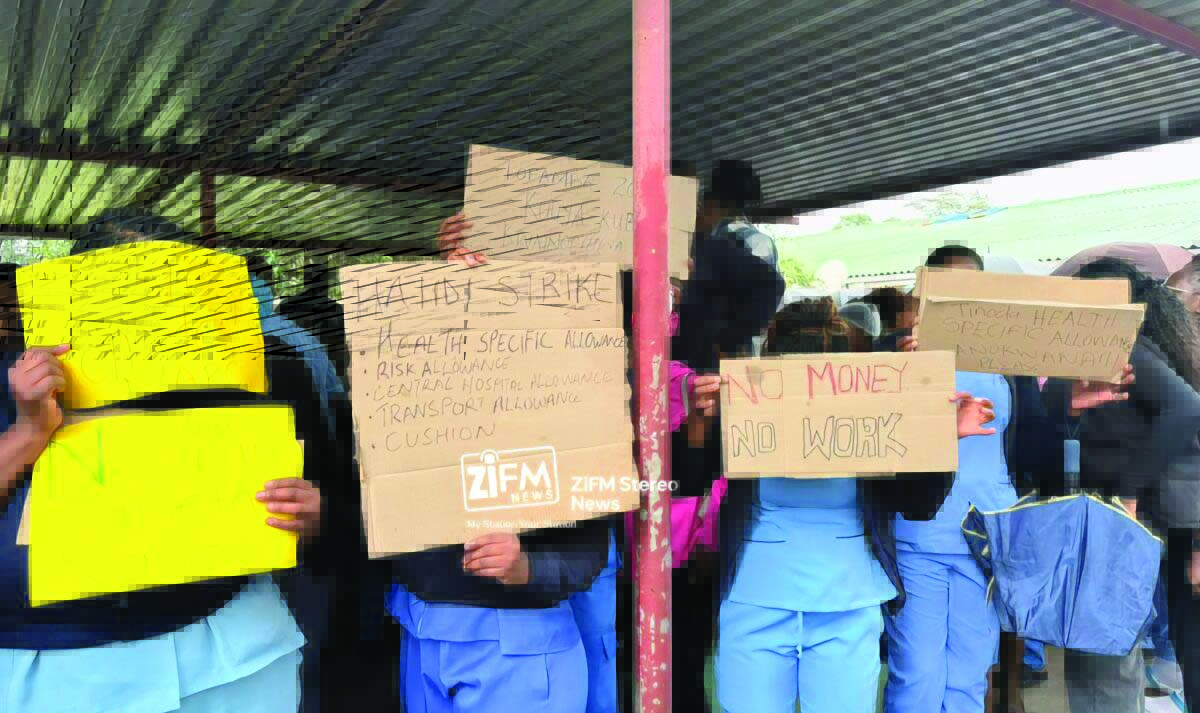
Nurses protests over salaries have spread to major public hospitals yesterday as the government pledged to address their grievances.
The demonstrations, which began last Friday at Sally Mugabe Hospital, reached Parirenyatwa and Chitungwiza Central hospitals yesterday.
Nurses who spoke on condition of anonymity highlighted that transport costs have become a primary hurdle.
“Fuel prices have increased, and transport is now too expensive for us. We are struggling to go to work because we cannot afford to commute,” one nurse said. Another added that while they remained committed to their profession, the current pay was insufficient to sustain their families.
In response, the Health Service Commission (HSC) last night said it was urgently addressing the workers’ plight.
HSC Secretary Christopher Pasid confirmed that a comprehensive job evaluation exercise had been completed and is now moving toward implementation.
“This critical process will establish a fair, transparent, and equitable grading structure across the health sector,” Pasid said. “It is being aligned with the broader civil service salary review to ensure coherence, sustainability, and improved remuneration frameworks.”
However, Zimbabwe Nurses Association (Zina) organizing secretary Kumbirai Maisva noted that the protests were a grassroots movement by the nurses themselves rather than a union-coordinated action.
“The demonstration was called by the nurses because of the low salaries they are getting,” Maisva said.
He pointed out the disparity between travel costs and allowances, noting that some nurses pay up to US$3 for daily transport while receiving less than ZiG500 in allowances.
“Our demands were submitted last year, but there has been no response. The employer says they are waiting for a job evaluation, but because of the hardships, this delay does not make sense. We are also getting a night duty allowance of less than US$50; we want at least US$200 to US$250,” Maisva added.
Zina secretary general at Sally Mugabe Hospital, Farai Matsiwe, clarified that health workers were not refusing to work but were physically struggling to report for duty.
“We are not refusing to work. The nurses and workers want to continue coming to work, but reporting for duty right now is a challenge,” Matsiwe said.
He indicated that while workers would continue with day shifts, they have agreed to stop reporting for night duty until the allowances are adjusted to meaningful levels.
Discover more from 07 News Daily
Subscribe to get the latest posts sent to your email.