

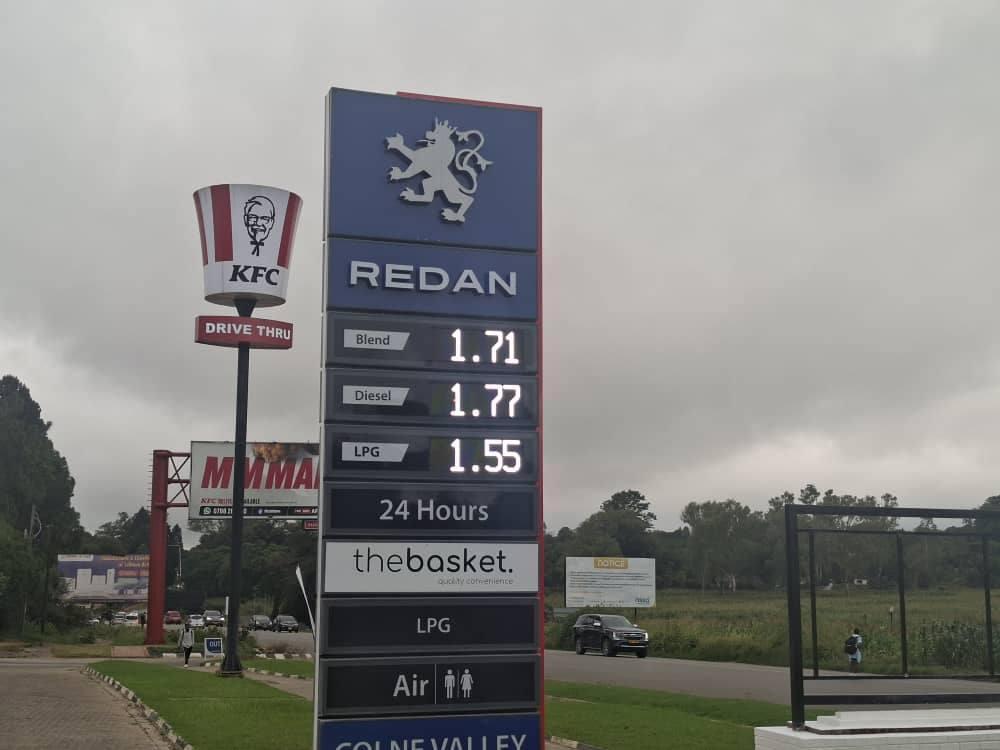
Following yesterday’s dramatic increase in national fuel prices, stakeholders fear a new wave of price increases and inflation.
According to the Zimbabwe Energy Regulatory Authority (Zera), the price of gasoline increased from $1.56 to $1.71 per litre, while the price of diesel increased from $1.52 to $1.77.
Without government action to “cushion customers” against a turbulent worldwide market, prices would have reached US$1.90, according to Zera.
Growing hostilities between the US, Israel, and Iran are the main cause of the spike. Market analysts caution that petroleum prices will continue to rise because to possible interruptions at the Strait of Hormuz, a crucial chokepoint for oil transit.
Zera sought to reassure the market about supply stability by announcing the higher prices in a statement and claiming that there were sufficient stocks on the market.
“The petroleum prices are with immediate effect from 4 March 2026 for the next two weeks.
“In the meantime, ZERA will be closely monitoring the market developments to ensure that there is adequate supply in the market.
“The above prices are as a result of the government reducing some of its charges to cushion the consumers from astronomical increases that have happened from changes in the international market.
“Without Government cushioning, the actual prices would have been US$1.90/litre for diesel and US$1.81/litre for blend,” read part of the statement.
Speaking to the 07Newsdaily yesterday the chief executive of the Zimbabwe National Chamber of Commerce (ZNCC), Chris Mugaga, said the increase would inevitably filter through to the cost structure of companies, as fuel is a key input in transportation, production and distribution across almost every sector of the economy.
“An increase in fuel prices is going to be inflationary. Which means it will increase the price of goods, given that fuel itself is a major component of the cost of production.
“And with the uncertainty of the world economy right now, we won’t be surprised if most businesses are to adjust their prices to around 10 percent to 15 percent above the cost they already have, given the role of oil or of fuel to do business,” he told the 07Newsdaily.
Mugaga said the adjustment comes at a time when businesses are already grappling with high operating costs, tight liquidity and subdued consumer demand, making it difficult for companies to absorb additional expenses without passing them on to customers.
“It could have been better in line with the government policy of addressing ease of doing business, like they have been doing all along, not to increase the fuel price. Following the movement of fuel, especially on the international market.
“The reason why we saw the increase was not necessary, especially when you look at the alignment of ease of doing business, is because almost 40 percent plus of fuel price in Zimbabwe is made of Excise duty.
“Government should have gone that duty whilst protecting industry in line with the ease of doing business.
“Government should have gone a long way in trying to protect industry by removing the duty, which is in alignment with ease of doing business and cost reduction,” he further told the 07Newsdaily.
Discover more from 07 News Daily
Subscribe to get the latest posts sent to your email.